Tuesday 6th June 2017
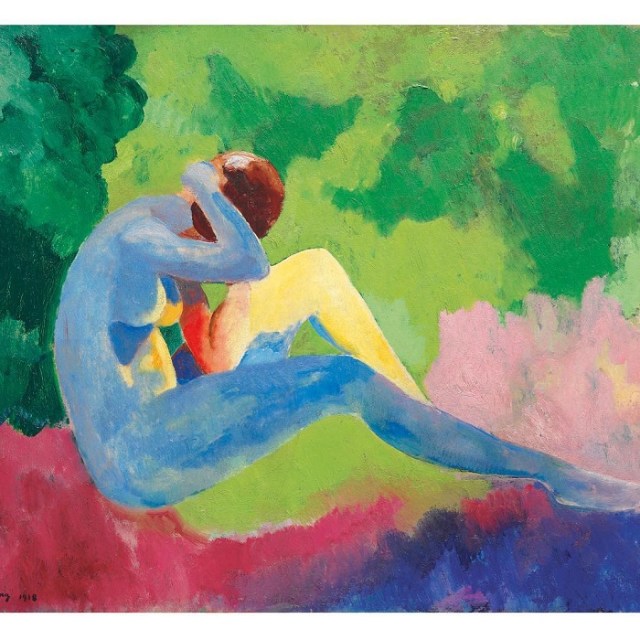
Nu dans le paysage, Moise Kisling (1891-1953), huile sur toile.
Impressionist and Modern Art Day Sale, Christie’s New-York, 16 Mai 2017
For artists over the centuries colour has regularly served as a pictorial element that simultaneously conveys meaning and stimulates the eye. For Leonardo da Vinci ‘colour’ had a semantic role; the four elements were represented by; green for Water, blue for Sky, yellow for the Earth and red for Fire.
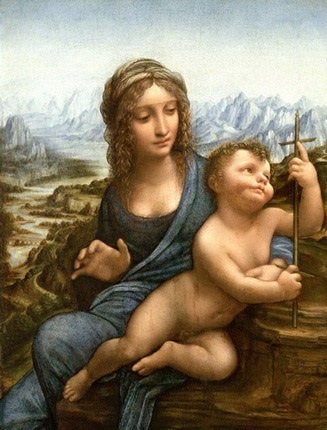
‘Madonna’ by Leonardo da Vinci, Italian (1452-1519)
In the 1670s Isaac Newton discovered through working with prisms that white light contained the entire colour spectrum. The mathematician’s presentation of colour as a chart revealed how each colour had its complementary (the colour that produces grey when mixed with it), he introduced the idea that colour could be deployed rationally to achieve premeditated effects.
The French late nineteenth-century painters who believed that seeing was ‘coloured’ by feeling shared a preoccupation with ‘colour’ and its psychological effects. Searching for a way to communicate the sunstruck brilliance of the Provencal landscape, Vincent van Gogh declared “There is no blue without yellow and without orange.”
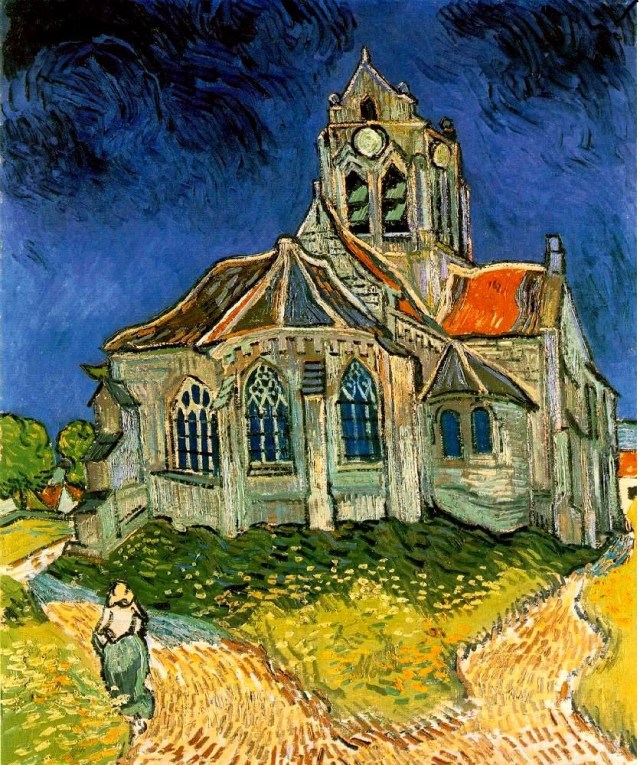
‘The Church at Auvers’ 1890 by Vincent van Gogh
Van Gogh’s belief that “I have tried to express the terrible passions of the human heart by means of red and green” led the twentieth-century artists to create a “chromatic language”. For Mark Rothko’s his Color Field paintings were, in his own words, “a spiritual vibration”.
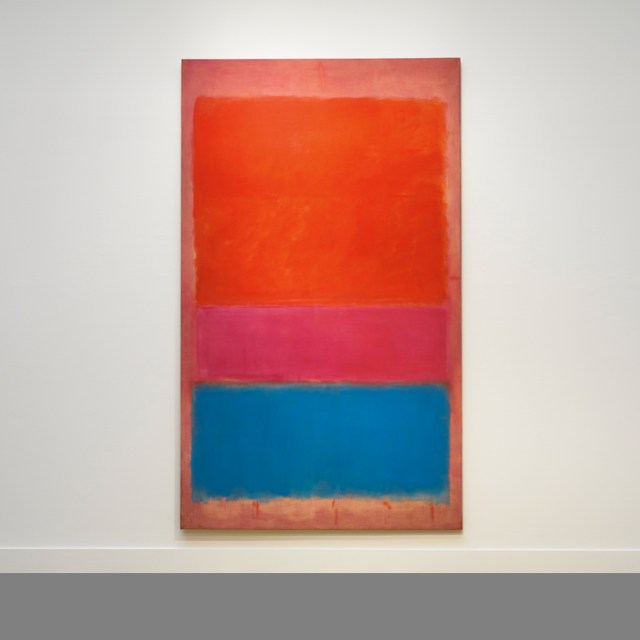
‘Royal Red and Blue’ 1954 by Mark Rothko
Best Wishes
Claire Moore
GALLERY MANAGER
 A FIRST SIGHT OF ‘TURNING TO STONE’